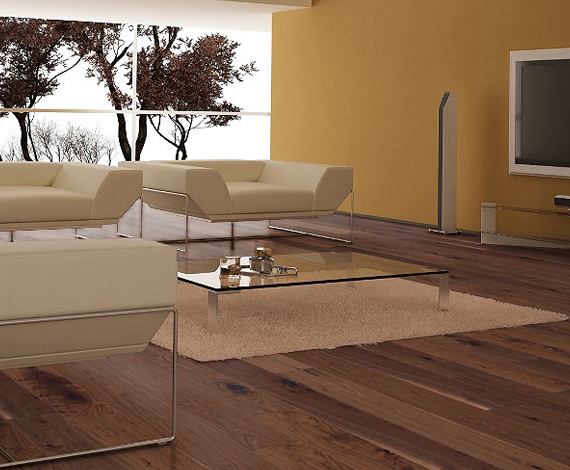
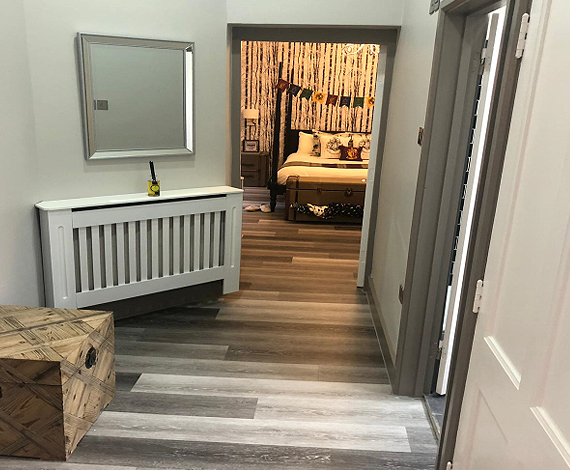
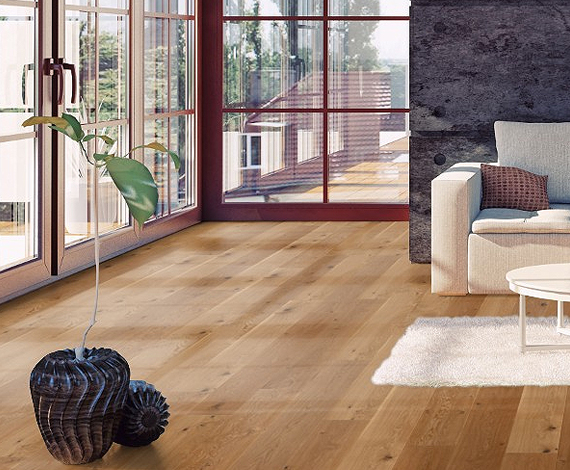
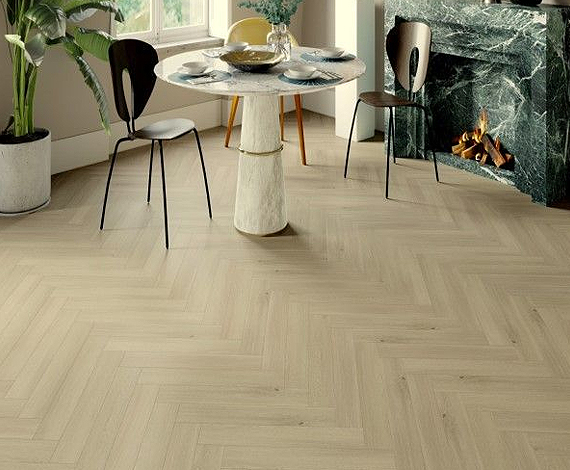
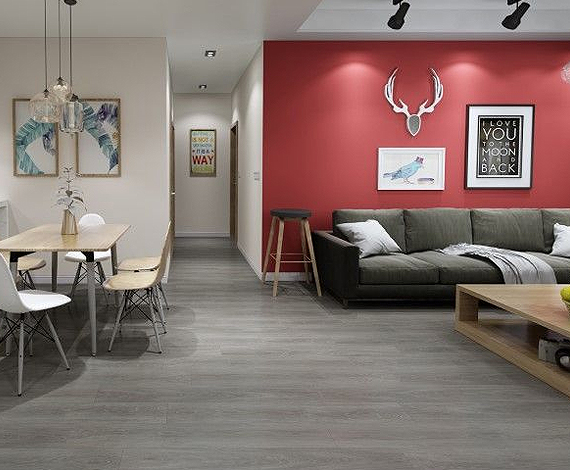
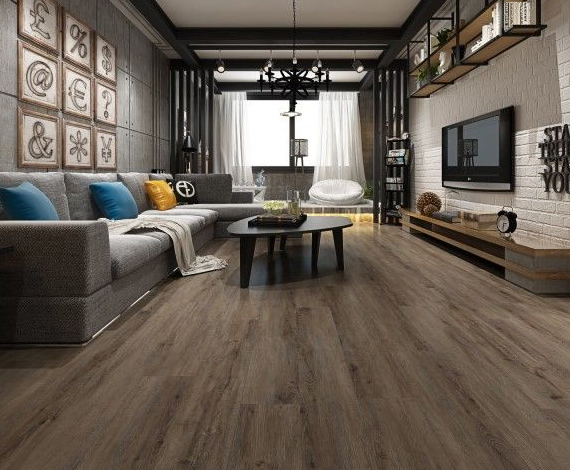
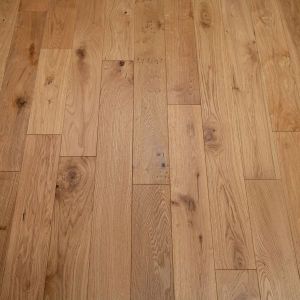
Solid oak flooring tends to be the most popular variety but other species are also available such as Walnut. Wood flooring has been around for, quite literally, centuries and despite modern materials and methods being developed and becoming available over the years, real wood floors show no signs of going away or losing their popularity. This is, undoubtedly, due to their sheer beauty and durability combined with an individuality that only mother nature could create. No two planks ever look the same. Mass production techniques simply cannot compete with this. Solid wood flooring comes in a wide array of colours and finishes from deep, rich browns to soft, light, white oak. There will always be a floor available to enhance and compliment any kind of room whether domestic or commercial with the exception of bathrooms where they are not particularly suitable.

Wood flooring is usually finished in one of three ways. Firstly, it can be unfinished and whilst a variety of coatings can optionally be applied, many choose to leave it completely unfinished, allowing the wear and tear of real world life and activity over the years to age it and bestow a true rustic character. A lacquered finish is probably the easiest to maintain for those who wish to preserve a pristine appearance with minimal, basic cleaning. And lastly, an oiled wood floor is maintained and cleaned with the same usual traditional methods but will need to be oiled from time to time as and when required.

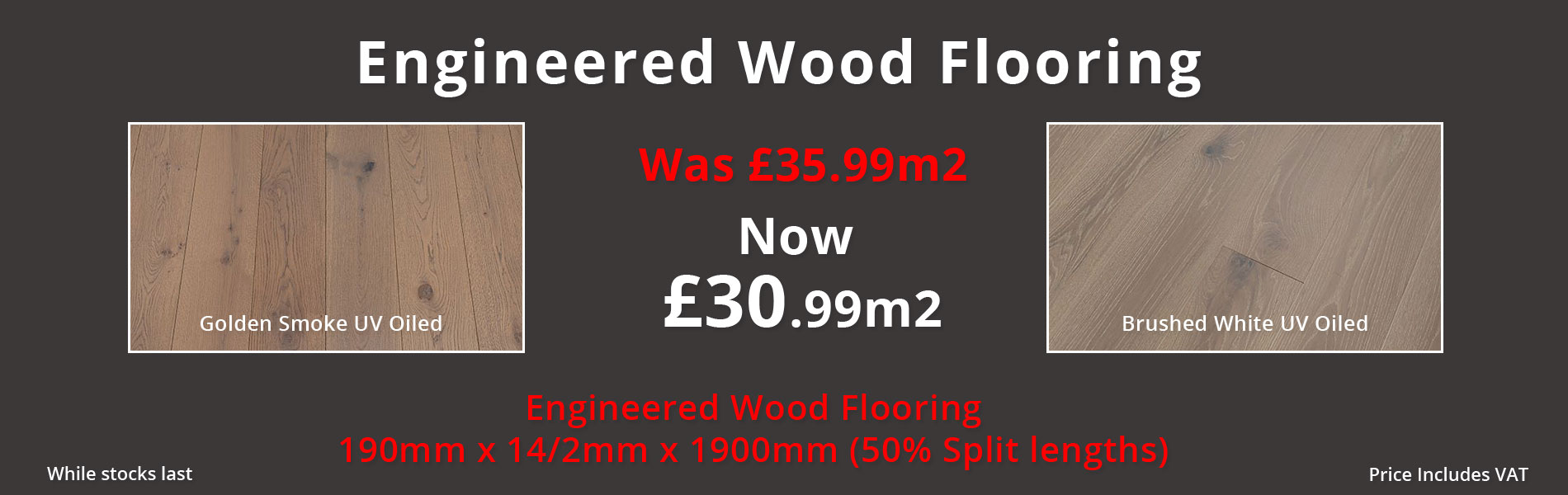
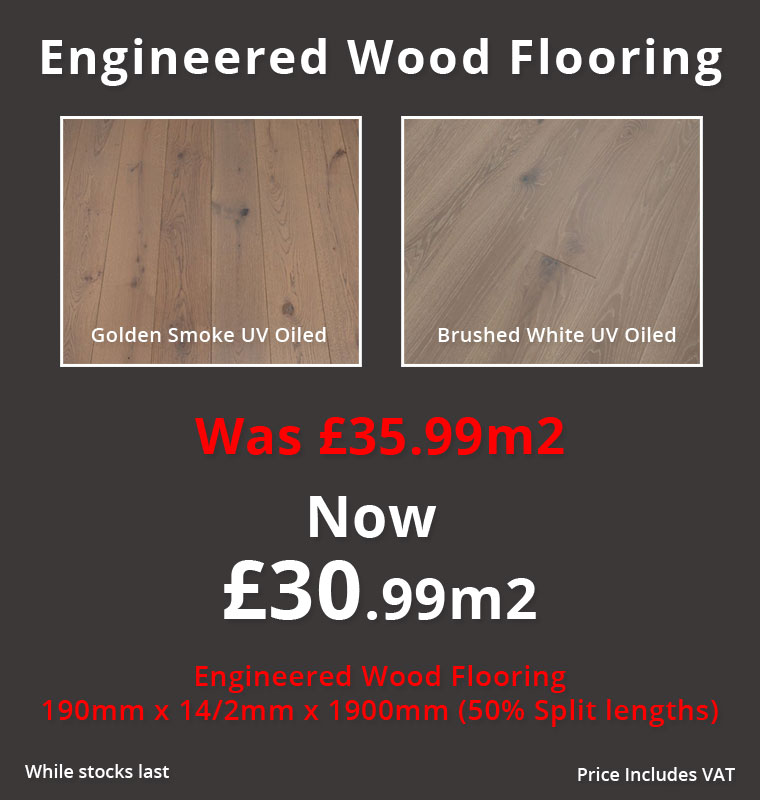
Engineered wood flooring has, to all intents and purposes, the same superior and attractive appearance of solid wood flooring but with some added advantages that are well worth considering. An engineered wood floor usually comprises three distinct layers that are bonded together. The top layer, also known as the Lamella, is the part you actually see and will be derived from high quality timber that is thick enough (approx 8mm) such that it can be re-sanded and finished any time in the future if desired. The middle layer, also known as the core or substrate, is made from either plywood, birch or poplar with each layer having its grain running in the opposite direction to the last which gives it incredible strength and makes it resistant to atmospheric conditions such as ambient temperature and humidity. It is due to this construction technique that engineered wood flooring can have certain advantages over solid wood flooring such as the potential to have under-floor heating installed beneath it as well as avoiding problems caused by expansion and contraction due to heat and moisture.

Often, a third base layer is also used which provides further stability and sandwiches the core layer creating, in effect, a seal that gives the core additional protection from damp etc. Engineered wood flooring is available in the same wide range of species, colours and finishes as solid wood flooring catering for tastes and requirements from antique, rustic and rural to sleek, modern and stylish.

With laminate flooring, the sky really is the limit when it comes to choice of style and appearance. This is because the visible layer is actually an image created using a photographic technique which allows for its appearance to be that of any conceivable material. Most commonly these will be the wide variety of wood species and their corresponding hues such as oak, walnut, cherry, beech etc in planks or boards of various widths. But anything is possible, tiles being particularly popular especially for use in kitchens. The visible layer is bonded on top of a core layer made from highly compressed wood (either MDF or HDF) and a protective layer of melamine or similar is applied which makes it very hard wearing.

Laminate flooring is considerably lower in cost than both solid wood and engineered wood flooring not that this implies any compromise in terms of quality or durability. In fact, there are benefits associated with laminate flooring not only in terms of easy cleaning and maintenance once installed but installation itself is simple enough that a competent DIY enthusiast should be capable of fitting it with its click together system that does not require extra fixings such as nails and glue, meaning that professional fitters are not necessarily required as is the case with solid wood or engineered wood flooring. Laminate flooring is not only an attractive addition to any home but can also be an ideal solution in commercial situations such as retail outlets, bars and office environments.

There are many associated accessories and ancillary products necessary for the fitting, installation and ongoing maintenance of your solid, engineered or laminate flooring. Certain floors may require an underlay which can serve purposes including stability, damp proofing and thermal insulation as well as sound reduction with special varieties available that are suited to situations where under-floor heating is involved. There is an exhaustive collection of matching trims that will be required to complete and perfect the installation of your floor. These include stair nosing, skirts and scotias for the edges of the floor within the room and moulded trims for use in doorways and boundaries between rooms where, perhaps, different flooring is used. Floorsave also stock a selection of tools that may be required when fitting your floor.

Depending on the type of floor in question, certain adhesives and bonding agents may be required for the installation of your flooring. At Floorsave, we can supply you with everything necessary to complete the fitting of your solid wood, engineered wood or laminate flooring. Aftercare, cleaning and maintenance products are essential in order to preserve the original beauty and durability of your floor. These might include lacquers and oils which need to be applied periodically as well as coatings, cleaning products and cleaning kits.